
 Available in US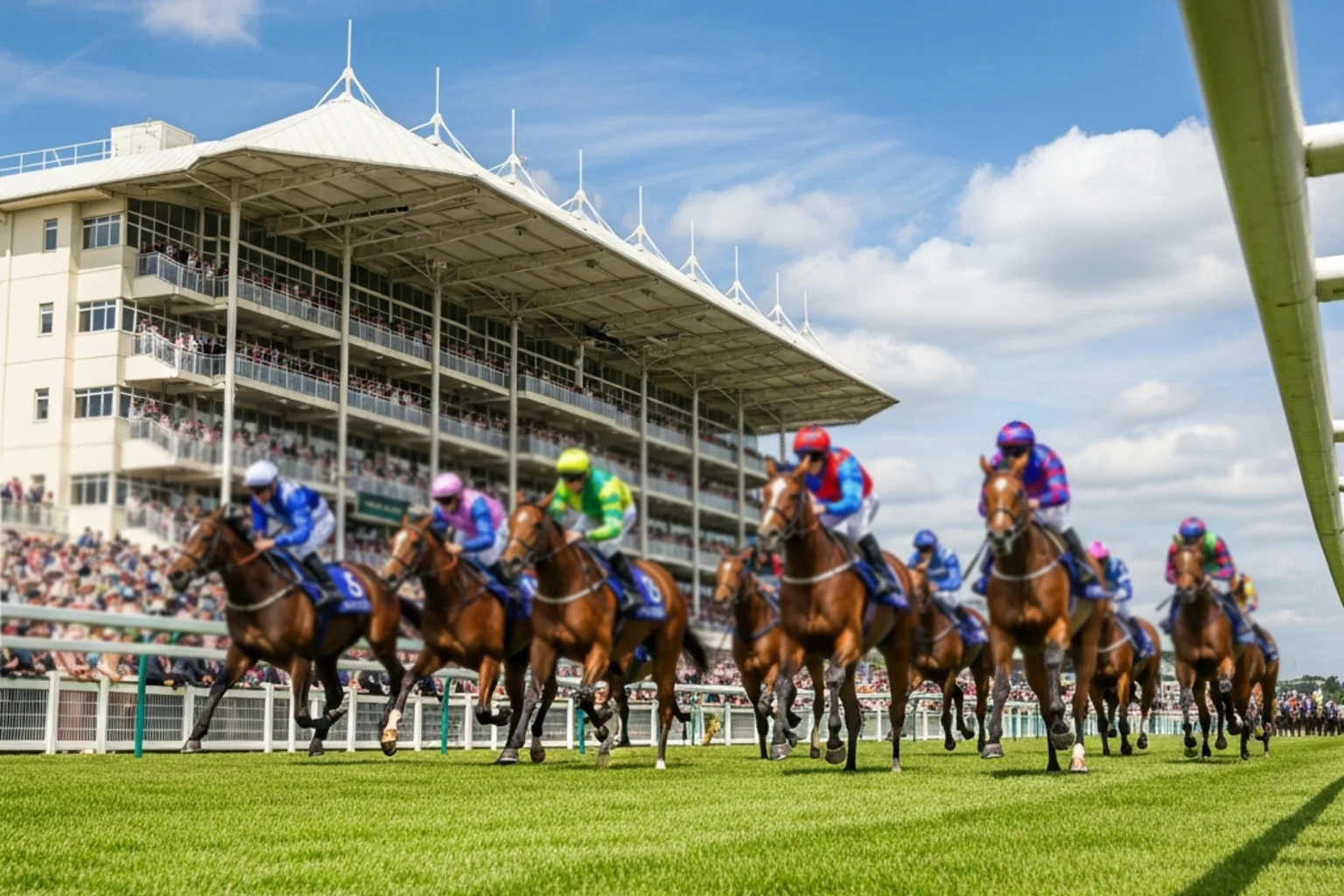
Royal Ascot is the one week of the year when flat racing stops being a niche interest and becomes a national conversation. Five days, thirty races, and a concentration of Group 1 talent that no other British meeting can match. For ante-post bettors, it represents both an opportunity and a trap — markets open months in advance, but the fields shift dramatically as the Guineas trials and early-season form begin to reshape the picture.
What makes Ascot’s ante-post landscape distinct from Cheltenham or the Grand National is the reliance on emerging form. Jump racing bettors track horses across a whole winter campaign, building a body of evidence. Flat bettors often work from juvenile form that may be twelve months old, projecting how a horse might develop from two to three. That projection is where the value lives — and where most ante-post punters trip up. According to the BHA’s 2025 Racing Report, average turnover per race at Premier fixtures — of which Royal Ascot is a flagship — rose by 1.1% even as core meetings declined by 8.1%. The big meetings still draw the money, and Ascot draws more than most.
Why Royal Ascot Matters
Ascot holds a peculiar position in British racing. It is simultaneously the most fashionable meeting on the calendar and one of the most competitive. The five days host races ranging from the Queen Anne Stakes on day one — typically a clash of older milers — to the Wokingham Handicap, a cavalry charge of two dozen sprinters where ante-post favourites go to die. In between, there are the showpiece events: the Prince of Wales’s Stakes, the Gold Cup, the Commonwealth Cup, and the Diamond Jubilee.
The commercial weight of the meeting is significant. British racecourse attendance reached 5.031 million in 2025 — a 4.8% rise and the first time the figure passed five million since 2019 — and Royal Ascot is comfortably the highest-attended flat fixture. Television audiences regularly clear two million per day on ITV. For bookmakers, it is the week that dominates flat racing’s ante-post turnover, with markets on the feature races often priced up the previous autumn.
For the ante-post bettor, the volume of racing and range of race types creates a broader canvas than Cheltenham, where the focus narrows to championship events and a few key handicaps. Ascot offers Group 1 puzzles, handicap lotteries, and sprints where speed figures matter more than staying power. That variety demands different approaches depending on the race.
Key Races and Markets
Not all Ascot ante-post markets are created equal. The championship-level races — Queen Anne, Prince of Wales’s, Gold Cup, Commonwealth Cup, Coronation Stakes, Diamond Jubilee, and St James’s Palace — tend to attract small fields and shorter-priced favourites. These races can be useful for ante-post bettors who have identified a well-handicapped older horse being aimed at a specific target, but the value is often modest. An established miler being pointed at the Queen Anne might shorten from 5/1 to 7/2 — worthwhile, but not transformational.
Where Royal Ascot ante-post betting really comes alive is in the big handicaps: the Royal Hunt Cup (mile), the Wokingham (six furlongs), the Buckingham Palace Stakes, and the Duke of Edinburgh. These races routinely attract fields of twenty or more runners, with ante-post prices of 16/1 to 50/1 widely available. The margins for error are large, but so is the potential reward. Each-way ante-post betting finds its natural home here.
A third category worth monitoring is the juvenile races — the Coventry, the Norfolk, the Albany, the Chesham. These are notoriously hard to bet on ante-post because the fields contain lightly raced horses whose ability is uncertain. But when a standout juvenile emerges from early-season maidens, the ante-post prices can be generous before the market catches up.
Connecting Guineas and Trial Form
The single most important period for Royal Ascot ante-post markets runs from late April through early June. The Guineas at Newmarket in early May resets the entire three-year-old picture. Horses that were speculative 33/1 shots for the St James’s Palace suddenly become 4/1 favourites after a Guineas second. Horses that flopped drop off the radar entirely.
The Dante Stakes at York, the Lockinge at Newbury, the Temple Stakes — these are the trials that feed directly into Ascot ante-post markets. The smart ante-post bettor works backwards from these trials. If you think a horse is likely to run well in the Lockinge and then head to the Queen Anne, backing it before the Lockinge offers a better price than waiting for the confirmation of a strong run.
There is a subtlety here that separates Ascot from Cheltenham. At Cheltenham, many ante-post punters back horses in November and hold through the winter. At Ascot, the window is narrower. Markets are available from the previous autumn, but the real value appears in the four to six weeks before the meeting, when trial form and trainer quotes start aligning with runner declarations. Backing too early risks encountering plan changes, supplementary entries, and ground concerns that are impossible to anticipate in January.
When to Bet on Ascot
The optimal timing depends on the race type. For championship races, the window between the Guineas and the five-day declaration stage — roughly a three-week stretch — is where the market settles. Back before the Guineas and you are guessing at plans. Back after declarations and the prices are compressed.
For handicaps, the critical moment is the publication of weights and the initial entries. Bookmakers price up handicap markets based on expected entries, and the early prices on horses with relatively low weights and rising form can be generous. Once the ante-post market gains volume in the final fortnight, those prices shorten rapidly. The BHA reported that participation in horse race betting nearly doubles from winter to spring and summer — rising from 4% to 7% of the adult population according to the Gambling Commission’s survey — and Royal Ascot sits at the centre of that seasonal surge.
NRNB offers are less common for Ascot than for Cheltenham, though some bookmakers extend them in the final week. If you are betting ante-post on Ascot without NRNB, ensure the horse is a confirmed entry and that trainer signals are pointed at this specific race. Multiple entries across different Ascot races — common for yards like Aidan O’Brien — are a red flag. If a horse holds entries in both the Coventry and the Norfolk, the trainer is hedging. You probably should be too.
Ascot-Specific Pitfalls
Ground is the great disruptor at Royal Ascot. The meeting takes place in mid-June, when the going can range from firm to good to soft depending on the spring’s rainfall. A horse backed ante-post for the Gold Cup on the assumption of good ground might face yielding conditions that completely alter the race dynamic. Unlike at Cheltenham, where soft ground is the default expectation, Ascot’s going is genuinely unpredictable.
Supplementary entries are another hazard. Horses can be supplemented into Group 1 races at a cost, and a late supplementary entry of a high-class performer can dramatically reshape the market. If you have backed a horse at 8/1 for the Prince of Wales’s Stakes and a supplementary entry from Ballydoyle cuts your selection to 12/1, the value proposition changes overnight. Keep a reserve for hedging or accept the risk.
Finally, beware the Ascot draw. In large-field handicaps, the draw can be decisive — particularly over five and six furlongs. An ante-post selection that draws the wrong side of the track may be compromised before the gates open. This is a risk unique to flat racing’s big-field sprints and one that cannot be accounted for when betting weeks in advance. Treat ante-post handicap bets as each-way propositions and keep stakes modest.
Ante Post Betting on Royal Ascot — More on this topic at ante post betting.
See also When Do Ante Post Markets Open? Racing Calendar Guide.
