
 Available in US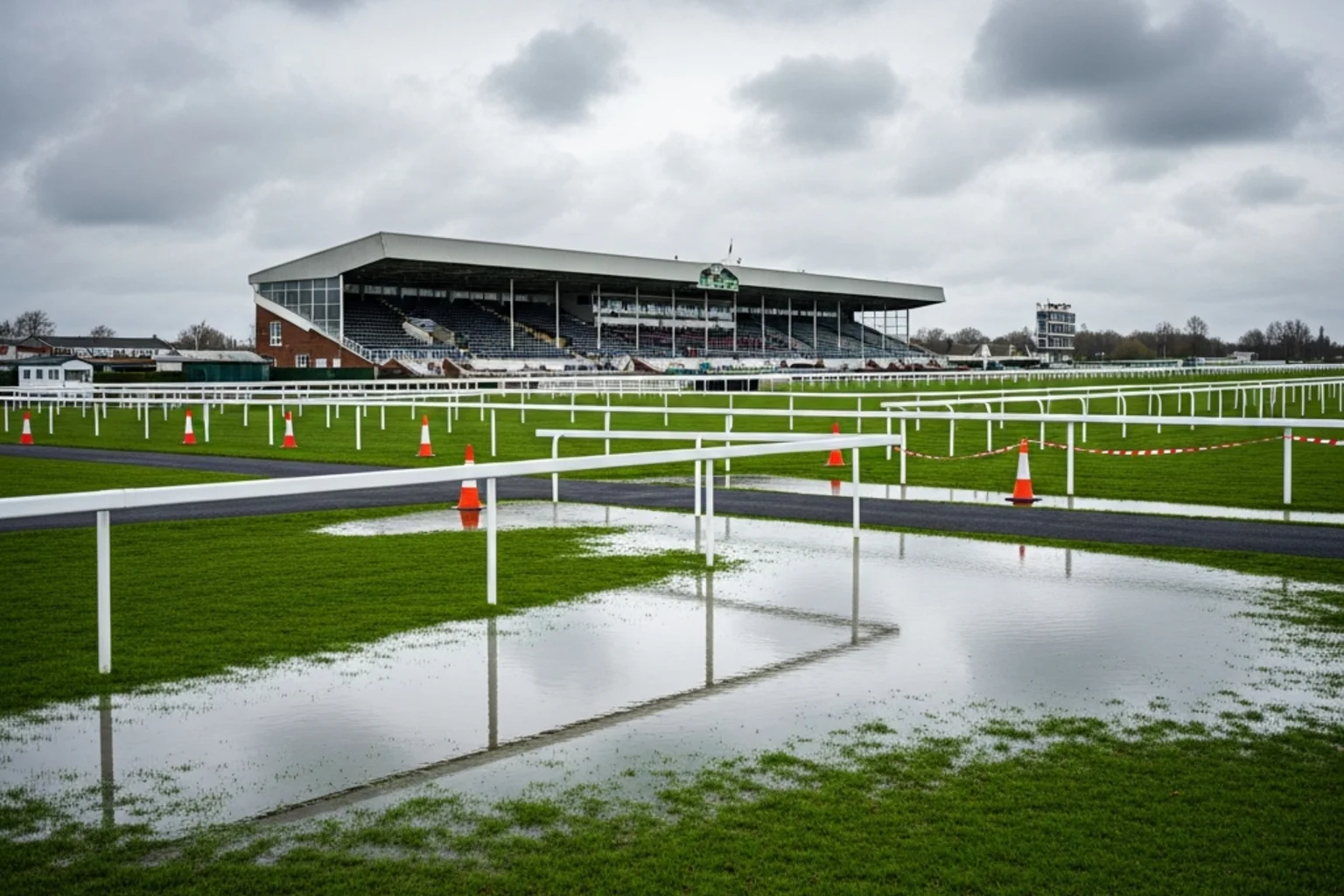
British weather is unpredictable, and so is its impact on your ante-post bets. A race that has been in your sights for months can be wiped from the card by frost, flooding, or a waterlogged track. When that happens, the fate of your ante-post stake depends on exactly what kind of disruption occurred — and the distinction between abandoned, postponed, and relocated is not semantic. Each scenario triggers different settlement rules, and getting them confused can mean the difference between a refund and a lost stake. Overall racing turnover fell 4.3% in 2025, according to the BHA’s annual report, and weather-related disruptions are one of the factors that erode punter confidence in ante-post markets.
Abandoned: Full Void
If a race is abandoned outright — declared void and not rescheduled — all ante-post bets on that race are void. Your stake is returned in full, regardless of when the bet was placed. This is the most straightforward outcome and the one that causes the least controversy.
Abandonment typically happens when an entire meeting is called off due to unsafe conditions. Frost, heavy snow, or persistent rainfall can make a racecourse unraceable, and the clerk of the course — in consultation with the stewards — has the authority to abandon at any point, including mid-meeting. If a specific race within an otherwise active meeting is cancelled (a rarity, but possible if conditions deteriorate during the day), the same void principle applies to that individual race.
The refund is automatic at most UK-licensed bookmakers and on betting exchanges. You should not need to contact customer support, though checking your account within a few days of the abandonment is sensible. For bets placed well in advance, the refund may appear as a settled bet at odds of 1.0 rather than a visible “void” notification, depending on the platform.
One point that catches people out: if an individual race within a multi-race meeting is abandoned but the rest of the card continues, only bets on the cancelled race are voided. Your ante-post bet on the feature race two hours later stands, even if conditions are deteriorating. The clerk of the course assesses each race independently, and the abandonment of one does not automatically trigger the abandonment of another.
Postponed at Same Track
This is where the rules become less intuitive. If a race is postponed but rescheduled at the same venue with the same entries, most bookmakers treat your ante-post bet as still active. The bet carries forward to the new date. Your odds remain locked in, and the original terms apply.
The logic is that a postponement at the same track with the same field does not materially change the proposition you bet on. The horse you backed is still expected to run over the same course and distance, against the same opposition. The only thing that has changed is the date — and possibly the ground conditions, which is a risk you accepted when placing the bet.
This rule has bitten punters before. A horse backed ante-post for a Saturday feature that is postponed to the following week may face different going conditions on the new date. If those conditions do not suit your selection, tough luck — the bet stands. You cannot request a void simply because the postponement has altered the ground. The only way to exit is through cash out (if available) or hedging on an exchange.
Relocated to Different Track
If a race is moved to a different racecourse, ante-post bets are voided. This is an established principle across virtually all UK bookmakers and follows the Tattersalls Rules of Racing. The reasoning is clear: a race at a different venue is a fundamentally different proposition. Course configuration, going conditions, altitude, camber, and rail positions all change. A horse backed for a three-mile chase at Cheltenham cannot fairly be expected to contest the same race at Sandown.
Relocations are rare but not unheard of. Weather events that make one course unraceable can sometimes prompt organisers to shift a fixture to a nearby track. When this happens, the entire ante-post market on that race is collapsed and all stakes returned. If only some races from the meeting are relocated — and this is an edge case — then only those specific races are voided. Bets on races that remain at the original venue stand.
Entries Reopened
The most nuanced scenario. If a race is postponed and the entries are formally reopened — meaning new horses can be added to the field — then the settlement rules split depending on when you placed your bet. Bets placed after the initial entry stage are voided, because the reopening of entries changes the field and invalidates the market those bets were placed into. Bets placed before the initial entry stage stand, because the bettor committed their stake without knowing any of the entries and accepted a broader range of uncertainty.
This distinction matters most for long-range ante-post bets. If you backed a horse for the Grand National in October — well before the entry stage in late January — and the race is postponed with entries reopened, your bet survives. If a friend backed the same horse in February, after the entries were published, their bet is voided. Same horse, same race, different outcomes based solely on the timing of the wager.
The practical takeaway is that early ante-post bets carry a hidden form of resilience against postponement disruption. They are not immune — a relocation still voids them — but they survive the entries-reopened scenario that would kill a later bet. It is a minor structural advantage, but in a sport where the margins are thin, minor advantages accumulate.
Recent Season Examples
Weather disruption is not hypothetical. In recent seasons, frost and heavy rain have caused multiple meetings to be abandoned or rescheduled, affecting ante-post bettors who had stakes riding on feature races. Cheltenham’s Trials Day in late January is particularly vulnerable — it falls in the depths of winter and has been affected by frost more than once. When a Trials Day race is abandoned, the ante-post information it was supposed to provide disappears, and the market for the Festival itself is left operating with less data.
The BHA’s survey of racing bettors found that one in ten had already turned to unlicensed operators. Part of what drives that drift is frustration with the perceived complexity of regulated betting rules — including the kind of scenario-dependent void rules described above. A punter who loses an ante-post stake to a non-runner and then sees another bet voided by a postponement may feel the system is stacked against them. It is not, but the rules are undeniably intricate, and bookmakers have done a poor job of communicating them clearly.
The best defence is knowledge. Before placing any ante-post bet, understand your bookmaker’s specific rules on abandonment, postponement, and relocation. These rules are published in the terms and conditions — usually under “Future Racing” or “Ante-Post” — and vary slightly between operators. Exchange rules differ again, with Betfair applying its own framework for voided markets and re-opened entries. Checking the rules costs five minutes. Discovering them the hard way costs whatever your stake was.
What Happens to Ante Post Bets If a Race Is Abandoned — More on this topic at ante post betting.
See also History of Ante Post Betting.
