
 Available in US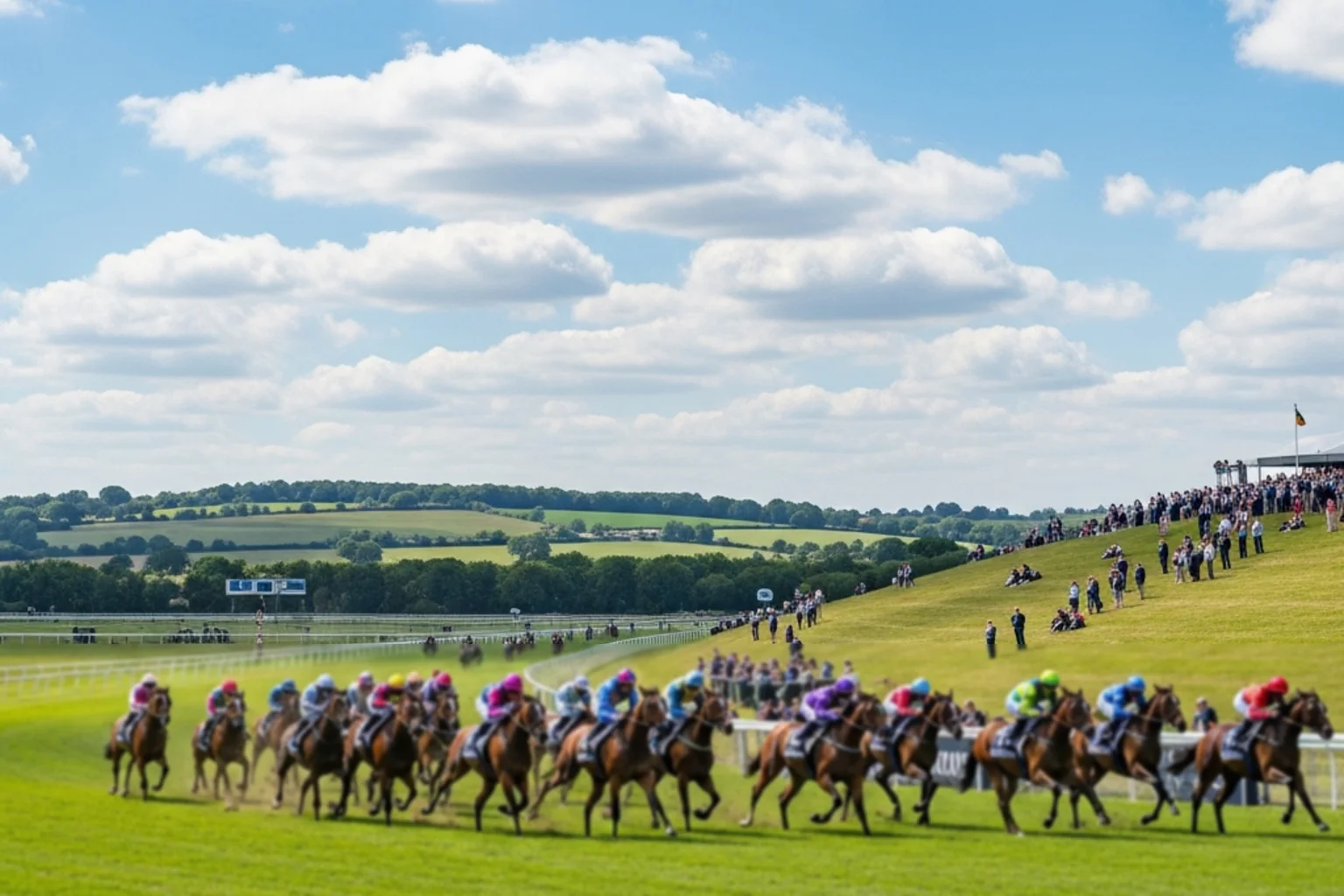
The Epsom Derby is flat racing’s ultimate ante-post puzzle. No other British race demands so much from a three-year-old — a mile and a half on an undulating course with a downhill camber that has undone more well-fancied horses than the form book can explain. The Oaks, its fillies-only equivalent, presents similar challenges over the same course and distance. Both races generate ante-post markets that open the previous autumn, evolve through the winter dead zone, and then accelerate violently in the weeks after the Guineas. For the ante-post bettor, the question is not just which horse to back — it is when to enter a market that can be generous in November, mispriced in March, and cruelly efficient by late May.
How the Derby Market Develops
The Derby ante-post market opens within hours of the previous year’s race. Bookmakers price up the following season’s leading juveniles — often before those juveniles have run more than once — and the market sits largely dormant through the winter. The flat turf season ends in November, and between that point and the first serious Classic trials in April, there is almost no new public form to update the picture.
The winter gap is where ante-post value lives and dies. A horse that won the Dewhurst Stakes at Newmarket in October — the traditional end-of-season championship two-year-old event — might be quoted at 8/1 for the Derby. By the time it wins the Dante at York the following May, it could be 3/1 or shorter. The five-month window between October and May offers the widest range of prices but also the highest information deficit. Injuries, setbacks, and trainer changes happen in the dark. Some horses physically mature over the winter and emerge as improved versions of their juvenile selves. Others do not.
The market’s sharpest movement occurs in three phases: after the Guineas at Newmarket (early May), after the Dante at York (mid-May), and at the supplementary entry stage. A horse not originally entered in the Derby can be supplemented at a cost of £75,000 — and the announcement of a supplement reshapes the ante-post market overnight. Recent seasons have seen high-profile supplements transform the betting landscape in the final fortnight before the race. The British racing prize money pool reached a record £194.7 million in 2025, and the Derby’s purse — among the richest on the calendar — justifies late supplementary entries from connections confident enough to pay the fee.
Oaks: A Parallel Market
The Oaks runs the day before the Derby at Epsom and is restricted to three-year-old fillies. Its ante-post market follows a similar trajectory — opening after the previous autumn’s top fillies’ races (the Fillies’ Mile at Newmarket, the Marcel Boussac at Longchamp) and crystallising through the spring.
The Oaks ante-post market is typically thinner than the Derby’s. Fewer bookmakers offer extensive coverage, and the prices tend to converge more quickly once the Guineas form is established. A filly that runs well in the 1,000 Guineas and is then pointed at the Oaks will shorten from a speculative ante-post price to near-favouritism in a matter of days. The optimal ante-post entry point for the Oaks is either the autumn — when prices reflect juvenile form and are at their widest — or the narrow window between the Musidora Stakes at York and the final declarations.
One pattern worth tracking: fillies that contest the 1,000 Guineas and then step up to the Oaks distance of a mile and a half. Not all Guineas fillies stay. The pedigree page is the first reference — a filly by a stamina-oriented sire out of a mare who stayed well is a more credible Oaks candidate than one bred purely for speed. The Guineas itself offers a visual test: did the filly finish strongly or fade in the final furlong? That finishing effort, or lack of it, is a crude but useful indicator of whether the Oaks distance will suit.
Using 2yo Form
The Derby and Oaks ante-post markets are uniquely dependent on two-year-old form, and that dependency is both the opportunity and the trap. The opportunity: juvenile form is public, timestamped, and available for analysis months before the market moves. A perceptive form reader who identifies a Classic-type horse from a mid-autumn juvenile race can secure a price that will never be available again once the spring trials validate the assessment.
The trap: two-year-old form is the most unreliable predictor of three-year-old performance in racing. Horses develop at different rates. Some peak as juveniles and regress. Others improve dramatically over the winter. The rate of physical and mental maturation varies by breed, by individual, and by training environment. Backing a horse for the Derby based solely on its two-year-old rating is like backing a footballer for the Ballon d’Or based on their under-18 performances. Sometimes it works. Often it does not.
The BHA’s figures show that average turnover at Premier fixtures — including Epsom’s Derby meeting — continues to hold up even as overall turnover falls. That concentration of betting interest means the Derby market is deep and competitive. Prices do not stay generous for long once the evidence arrives. The ante-post bettor who waits for certainty will pay for it in shorter odds. The one who acts on juvenile form accepts higher risk but captures wider value.
Spring Trials: Dante, Lingfield
The spring trials are the ante-post market’s reality check. The Dante Stakes at York, usually run in mid-May, is the most recognised Derby trial in Britain. Its roll of honour includes subsequent Derby winners, and a convincing Dante victory is the strongest single piece of evidence the ante-post market receives before the race itself. The Lingfield Derby Trial, run over the same distance on a course with a similar left-handed configuration to Epsom, offers a form reference that is geographically relevant if less prestigious.
Other trials worth tracking include the Chester Vase, the Dee Stakes, and the Novibet Derby Trial at Epsom itself — the only trial run over the Derby course. Each provides a data point, but none is definitive. The Dante carries the most weight because it attracts the strongest fields and is run on a galloping track that tests stamina and class. A horse that wins the Dante by three lengths is making a statement that the market will hear.
For ante-post bettors, the strategic question is whether to bet before or after the trials. Betting before captures a longer price but carries the risk of a poor trial performance destroying the thesis. Betting after confirms the thesis but at a shorter price. The hybrid approach — take a partial position before the trials, add to it after a positive result — balances these dynamics and is probably the most robust strategy for the Derby ante-post market.
Derby Day Pitfalls
Epsom is not a normal racecourse. The track rises sharply after the start, then drops downhill around Tattenham Corner before levelling off for the final two and a half furlongs. The camber on the bend pushes horses towards the outside rail, and the undulations test balance and coordination as much as speed and stamina. Some high-class horses simply do not act on the course. Others are unsettled by the atmosphere — Derby Day is one of the noisiest days in the racing calendar, with crowds, helicopters, and an open-top bus parade adding to the sensory load.
The ante-post bettor cannot preview the draw, which matters less at Epsom than at some tracks but still influences race tactics. Nor can they predict the pace — the Derby can be run at a crawl or a gallop depending on the makeup of the field, and the complexion of the race changes accordingly. These are race-day variables that ante-post prices cannot fully account for, and they are why the Derby — despite being the most analysed race in the calendar — continues to produce surprises. Accept that the ante-post Derby bet is a bet with inherent uncertainty, price that uncertainty into your staking, and treat the ante-post market as a way to capture superior value rather than a path to certainty.
Ante Post Betting on the Epsom Derby & Oaks — More on this topic at ante post betting.
See also Ante Post Betting Glossary.
