
 Available in US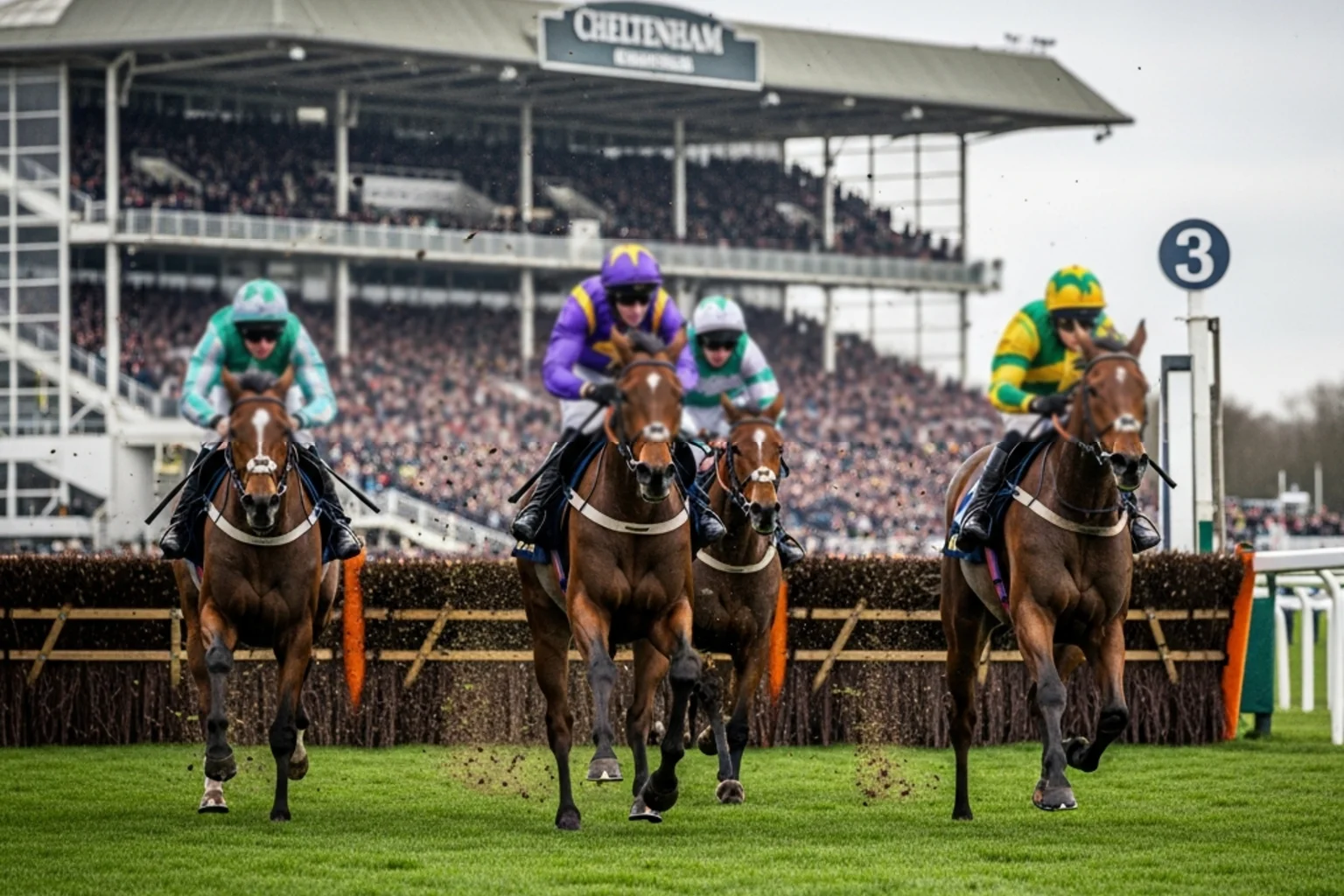
Each-way betting is the default safety mechanism for anyone backing a horse that might not win but could finish in the places. In standard race-day markets, it is well understood: half your stake goes on the win, half on the place, and the place part pays at a fraction of the win odds. Apply that structure to ante-post markets, though, and the picture shifts. Place terms can be different, fewer places may be offered, and the non-runner risk applies to both halves of your stake. Ante post each way betting is not simply the same bet placed earlier — it has its own dynamics, and getting them wrong can undermine what looks like a conservative position.
The numbers suggest punters are waking up to the value in this approach. Data from the 2024 Cheltenham Festival showed that each-way betting surged 25% year on year, driven partly by improved NRNB availability and partly by punters seeking a lower-volatility way into a meeting where outright favourites win barely a third of races.
How Each Way Works in Ante Post
An each-way bet is two bets in one. The win part pays at full odds if your horse finishes first. The place part pays at a fraction of the win odds — usually one-quarter or one-fifth — if the horse finishes within a specified number of places. A £10 each-way bet costs £20 total: £10 on the win, £10 on the place.
In ante-post, both halves are subject to the same non-runner conditions. If your horse does not run, you lose the entire £20 unless NRNB is active. There is no scenario where the win part is forfeited but the place part is refunded, or vice versa. They live and die together.
The each-way odds themselves are locked in at the moment you place the bet, just like any ante-post wager. If you take 16/1 each way at one-quarter the odds, your place part pays at 4/1. Those terms do not change even if the horse shortens dramatically before the race. This is one of the key advantages of each-way ante-post: you can secure generous place terms months in advance that may not be available on race day.
However, the number of places offered in an ante-post market is not always the same as on race day. Some bookmakers offer enhanced places — paying out on five or six places instead of the standard four — as race-day promotions that do not extend to ante-post bets. This means your each-way ante-post bet may be running for fewer places than someone who bets on the morning of the race. Always check the specific terms displayed on the ante-post market, not the general each-way rules for the race.
Place Terms: What to Check
Place terms in ante-post vary by bookmaker, by race type, and by field size. The standard framework in British racing is: handicaps with 16 or more runners pay four places at one-quarter the odds; non-handicaps with eight or more runners pay three places at one-fifth. For five to seven runners, two places are paid. Below five, it is win only.
In ante-post markets, these terms apply based on the anticipated field size at the time of betting, not the actual number of runners on the day. If eight horses are in the ante-post market when you bet but only six run, the place terms you were quoted should still apply — though this is worth confirming with the bookmaker, as practices can differ. Some operators reserve the right to adjust place terms if the final field size drops significantly below the ante-post field.
For Cheltenham Festival handicaps — the County Hurdle, Coral Cup, Martin Pipe — ante-post each-way bets often run for four places at one-quarter the odds, reflecting the large fields these races attract. Championship races like the Gold Cup typically offer three places at one-fifth the odds. The distinction matters: each-way value in a 24-runner handicap is structurally different from each-way value in a 10-runner championship event.
Each Way at Cheltenham: Why It Surged 25%
The 25% year-on-year increase in each-way activity at Cheltenham 2024 was not accidental. Several factors converged to make it the festival’s most notable betting trend. NRNB availability expanded, removing the non-runner risk from each-way ante-post positions and making the strategy safer. Enhanced place terms were offered on more races by more bookmakers, increasing the number of scenarios where the place part alone would generate a return.
The composition of the festival itself plays a role. Cheltenham runs 28 races across four days. Of those, roughly half are handicaps with large fields — exactly the type of race where each-way betting offers the best mathematical case. Over the decade from 2016 to 2025, favourites at Cheltenham won just 31.66% of races, meaning nearly seven in ten races were won by a non-favourite. In that environment, backing a horse each way at ante-post odds of 14/1 or 20/1 — where the place return alone can exceed your total stake — starts to look like a rational strategy rather than a hopeful one.
The growth also reflects a broader shift in punter behaviour. Recreational bettors, who form an increasing share of the market, tend to prefer lower-risk bet types. Each-way fits that profile perfectly: it doubles your chances of a return compared to win-only, and the cost is splitting your stake rather than increasing it. When NRNB removes the non-runner sting, the remaining risk is simply whether the horse performs — which is, after all, the part most punters want to bet on.
Pitfalls: Fewer Places on Ante Post
The most common each-way ante-post trap is assuming race-day terms apply. On the day, bookmakers frequently offer enhanced places as promotions — paying five, six, or even seven places on the Grand National, for instance. These enhancements typically do not cover ante-post bets placed weeks earlier. Your each-way ante-post on the Grand National may pay four places; someone who bets on the morning of the race might get seven. That is a significant difference in a 40-runner race.
Another pitfall is backing short-priced horses each way in small fields. If a championship race has only eight runners and your selection is 3/1, the place return at one-fifth the odds is just 3/5 — barely better than evens on the place part. The each-way structure adds value when the win odds are big enough to make the place fraction worthwhile. As a rough guide, each-way ante-post starts to offer genuine protection at odds of 8/1 or above in races paying four places.
When Each Way Beats Win-Only
Each way outperforms win-only in three specific ante-post scenarios. First, in large-field handicaps where the form is open and multiple horses have realistic place chances. The County Hurdle, Coral Cup and the Grand National are classic each-way ante-post targets. Second, when you believe a horse will run a big race but may not quite beat the market leader — a horse that is 16/1 to win but 4/1 to place can still deliver a strong return on the place half. Third, when NRNB is active and your downside is limited to the performance risk alone, each-way ante-post becomes one of the most efficient ways to back a well-fancied outsider.
Win-only remains the better choice when the horse is short-priced, the field is small, or you are highly confident in outright victory. If you genuinely believe a 3/1 shot is going to win a six-runner race, splitting your stake into win and place halves dilutes the return without adding meaningful protection. In those spots, a straight ante-post win bet — or even waiting for SP — typically offers a cleaner proposition.
Ante Post Each Way Betting — More on this topic at ante post betting.
See also Ante Post Market Movers.
