
 Available in US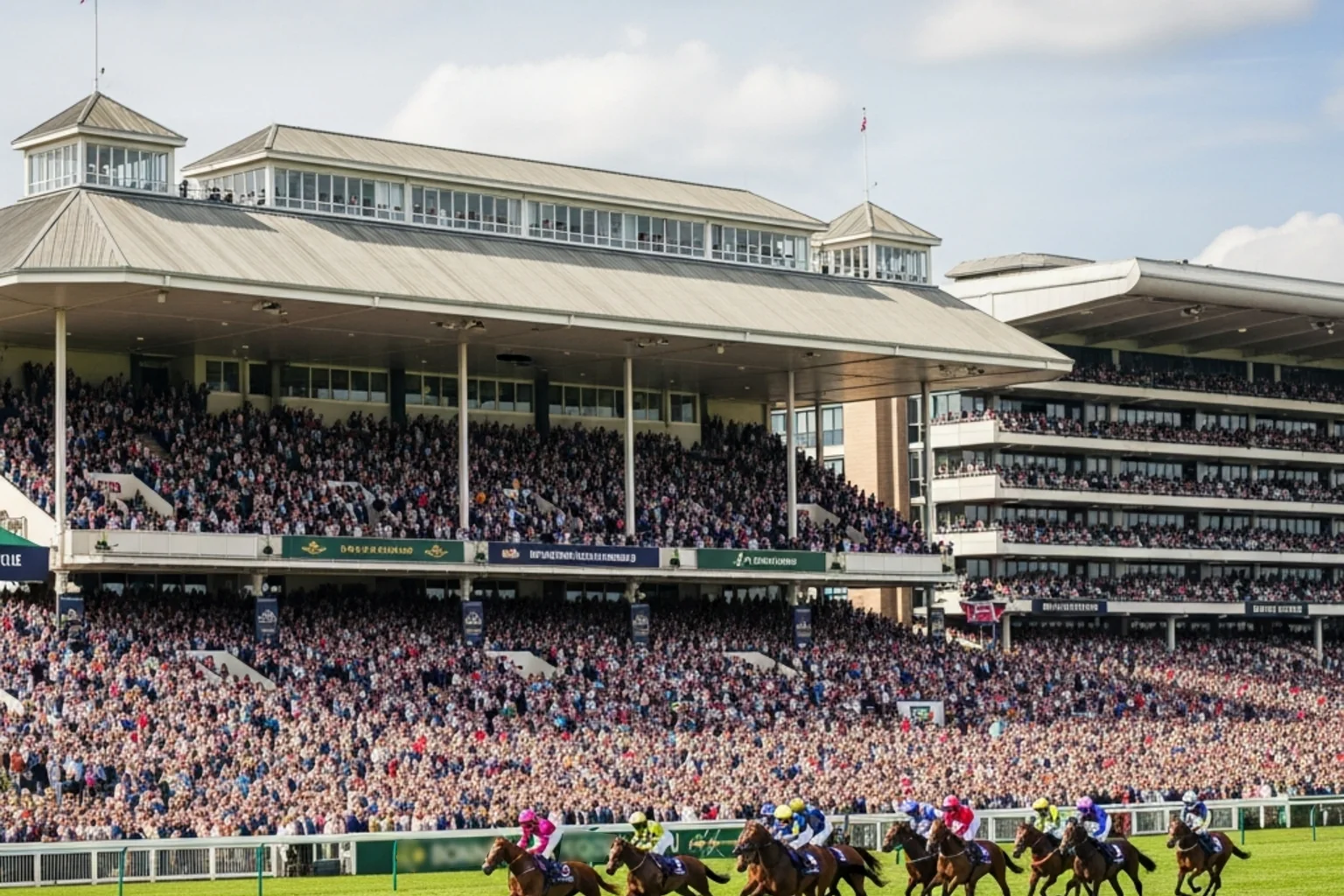
British horse racing is a sport sustained by betting. That relationship is not metaphorical — it is structural, financial, and measurable. The Horserace Betting Levy, prize money, racecourse investment, and veterinary research all flow from the money wagered on races. Understanding the scale and direction of the UK horse racing betting market is not an academic exercise. For anyone who bets on racing — and especially for ante-post bettors whose capital is locked in for months at a time — these numbers provide the context in which every wager is placed.
GGY: £766.7 Million
The headline measure of the UK horse racing betting market is Gross Gambling Yield — the amount retained by operators after paying out winnings. According to the Gambling Commission’s annual industry statistics for April 2024 to March 2025, remote horse racing betting generated £766.7 million in GGY. This places horse racing as the second-largest remote betting sport in Britain, behind football’s £1.3 billion but well ahead of any other discipline.
That £766.7 million figure is part of a total remote betting GGY of £2.6 billion across all sports. Horse racing therefore accounts for roughly 29% of Britain’s online betting revenue — a remarkable share for a sport that accounts for a fraction of the television audience commanded by football. The figure also represents a slight decline from the previous year’s £771.1 million, consistent with the broader downward trend in racing turnover.
For the ante-post bettor, GGY is relevant because it represents what the bookmakers keep. Every pound of that £766.7 million was extracted from bettors’ stakes through margins and overrounds. Ante-post markets typically carry higher margins than day-of-race markets — the uncertainty is greater, and bookmakers price accordingly. Understanding that you are betting into a market where the house retains roughly 10–15% of stakes is essential to setting realistic expectations for long-term returns.
Turnover: Three Years of Decline
While GGY measures what bookmakers retain, turnover measures what punters actually stake. And turnover has been falling. According to the BHA’s 2025 Racing Report, total racing betting turnover dropped 4.3% in 2025. That follows a 6.8% decline in 2024 and further declines in 2023. Cumulatively, 10.3% has been wiped off the racing betting balance sheet since 2023.
The decline is not uniform. Average turnover per race at Premier fixtures — the big Saturdays, the festivals, the televised events — actually rose by 1.1% in 2025. At Core fixtures, it fell by 8.1%. The split tells a clear story: recreational punters are concentrating their activity on the highest-profile events, while the everyday racing programme is losing its betting audience.
Alan Delmonte, Chief Executive of the Horserace Betting Levy Board, described the shift starkly: “There has been a material change in the industry environment with turnover down by around 20% in two years.” That material change is driven by a combination of affordability checks, competition from other betting products, and the migration of some high-staking customers to unlicensed operators.
Levy: Record High Despite Falling Bets
Here is the paradox at the heart of the UK racing market. Despite three consecutive years of falling turnover, the Horserace Betting Levy — the statutory contribution that bookmakers pay based on their gross profit from racing — reached a record £108.9 million in 2024-25. The previous record was £105.3 million in 2023-24.
How can the Levy rise while turnover falls? The answer lies in the distinction between turnover and gross profit. Turnover is the total amount staked. Gross profit is the amount retained after payouts — and it is influenced by race results. In a year where favourites lose more often than expected, bookmakers retain a higher proportion of stakes, and gross profit rises even as the total amount wagered declines. The Cheltenham Festival results in March 2025 were specifically cited by the HBLB as a material factor in pushing the Levy above expectations.
The Levy funds the infrastructure of British racing. In 2024-25, £66.9 million went to prize money, £19.4 million to regulation and integrity services, and £2.3 million to veterinary research. Every ante-post bet placed with a UK-licensed operator contributes to this ecosystem. Every bet placed with an unlicensed operator does not.
Attendance: 5 Million and Rising
While betting turnover has declined, racegoing is experiencing a revival. British racecourse attendance in 2025 reached 5.031 million — up 4.8% on 2024 and the first time the figure surpassed five million since 2019. Average attendance per fixture rose 3.6%. Under-18 attendance increased by 17%, suggesting the sport is reaching a younger demographic.
The BHA credited a combination of racecourse marketing initiatives and the £3 million industry-wide “The Going Is Good” advertising campaign. Television exposure also helped — the absence of a major men’s football tournament in summer 2025 meant more racing was broadcast on ITV’s main channel rather than ITV4, boosting visibility.
For the betting market, the attendance growth is a positive signal but an incomplete one. More racegoers does not automatically translate into more betting revenue. The new attendees may be attracted by the social experience rather than the wagering, and the average spend per racegoer on betting has not been publicly reported. Still, growing physical attendance provides a foundation for long-term engagement with the sport — and some of those new racegoers will inevitably become bettors.
Prize Money: Record £194.7M
Total prize money across British racing reached a record £194.7 million in 2025, a 3.5% increase driven by higher contributions from racecourses, owners, and the Levy Board. The increase is meaningful because prize money directly affects the quality of competition — higher prizes attract better horses, which in turn produce more compelling ante-post markets.
The distribution of prize money is uneven. Championship races at Cheltenham, Ascot, and Aintree command six- and seven-figure purses. Midweek maiden races at minor courses may offer purses of £5,000 or less. The disparity matters for ante-post bettors because horses targeted at higher-value races are more likely to be specifically prepared for those races — meaning trainer intent is clearer and the information available to the ante-post market is richer.
Horse Population: A Declining Pipeline
The least-discussed but potentially most significant trend in British racing is the declining horse population. The BHA forecasts that the number of horses in training will fall by 6–7% between 2024 and 2027. The decline reflects higher training costs, lower breeder confidence, and the thinning of the ownership base.
For ante-post markets, fewer horses means smaller fields. Smaller fields reduce the variance of race outcomes — there are fewer variables, fewer potential improvers, and less scope for long-priced surprises. In practical terms, this is likely to compress ante-post odds, particularly in novice races and lower-tier events where field sizes are already marginal. The championship events — Gold Cup, Champion Hurdle, Grand National — will continue to attract full fields, but the depth of competition beneath them may thin. Ante-post bettors should anticipate a market that gradually becomes more predictable at the top end and less liquid at the bottom.
The horse population decline also has implications for trial races. Fewer horses in training means fewer runners in the prep races that serve as form references for ante-post markets. A January Trials Day with fields of five instead of eight produces thinner form lines and less reliable data. The ante-post bettor operating in 2026 and beyond will need to extract more insight from less evidence — a trend that favours the attentive analyst and penalises the casual punter.
UK Horse Racing Betting Market — More on this topic at ante post betting.
See also Trial Races and Form.
